

ROI for Municipal & Retail Properties
What is a commercial wreath lifecycle strategy?
A commercial wreath lifecycle strategy is a structured 3–7 year infrastructure plan that includes engineered steel frames, wind-rated mounting systems, modular seasonal accents, controlled storage, and scheduled refurbishment to reduce annual replacement costs in municipal and retail environments.
Commercial-grade wreath programs for municipalities, downtown districts, retail centers, campuses, and hospitality environments must be treated as recurring capital assets, not seasonal décor. This guide outlines how to engineer, deploy, store, and refurbish wreath systems over a 3–7 year lifecycle to reduce replacement frequency and stabilize budgets.
Introduction: The Real Cost of Seasonal Wreath Programs

For municipalities, retail districts, campuses, and commercial properties, wreath programs are not decorative purchases — they are capital assets. When improperly specified or stored, wreath systems fail early and increase annual replacement costs.
Poor lifecycle planning results in:
- Premature UV degradation
- Structural failure after wind exposure
- Storage compression damage
- Annual repurchasing cycles
- Inconsistent streetscape branding
A properly engineered commercial wreath strategy prioritizes durability, wind-rated mounting, storage protocol, refurbishment cycles, and multi-year capital forecasting.
What Is a Commercial-Grade Wreath Program?

A commercial wreath program is a structured streetscape system designed for repeat deployment across public-facing environments, including:
- Municipal light poles
- Downtown banner corridors
- Retail property streetscapes
- Campus walkways
- Hospitality entrances
Unlike retail décor, commercial wreath systems are engineered for:
- Multi-year deployment
- Wind exposure
- UV resistance
- Repeat installation cycles
- Structured storage
1. Start with Commercial-Grade Construction Standards
What Makes a Wreath Commercial Grade?
Commercial-grade wreaths are engineered for public-facing environments and repeat deployment. Required specifications include:
- Powder-coated steel frames (rust-resistant)
- Reinforced welded structural cores
- UV-stabilized foliage rated for outdoor exposure
- Fade-resistant color systems
- Wind-rated attachment hardware
- Compression-safe branch construction
Retail-grade wreaths are not designed for lift deployment, wind load, or storage compression. They typically fail after one season.
Expected Lifecycle Benchmark
A properly engineered commercial wreath system typically performs for 3–7 years depending on climate zone, wind exposure, UV intensity, and storage discipline.

Explore Commercial-Grade Wreath Systems Engineered for Multi-Year Deployment.
2. Design for Multi-Season Adaptability

The most cost-efficient programs are modular. Instead of replacing the entire structure annually, commercial properties should:
- Maintain a neutral evergreen structural base
- Swap ribbon systems seasonally
- Integrate removable accent panels
- Rotate civic color overlays
- Install interchangeable branded emblems
This modular strategy reduces:
- Annual capital spend
- Installation labor hours
- Storage footprint
- Procurement frequency
It increases:
- Visual continuity
- Streetscape consistency
- Multi-year ROI
How can municipalities reuse commercial wreaths across multiple seasons?
Municipalities can reuse commercial wreaths by maintaining a structurally engineered evergreen base and swapping modular ribbon, accent panels, and branded overlays. This preserves the steel frame and mounting system while refreshing seasonal presentation without replacing core assets.
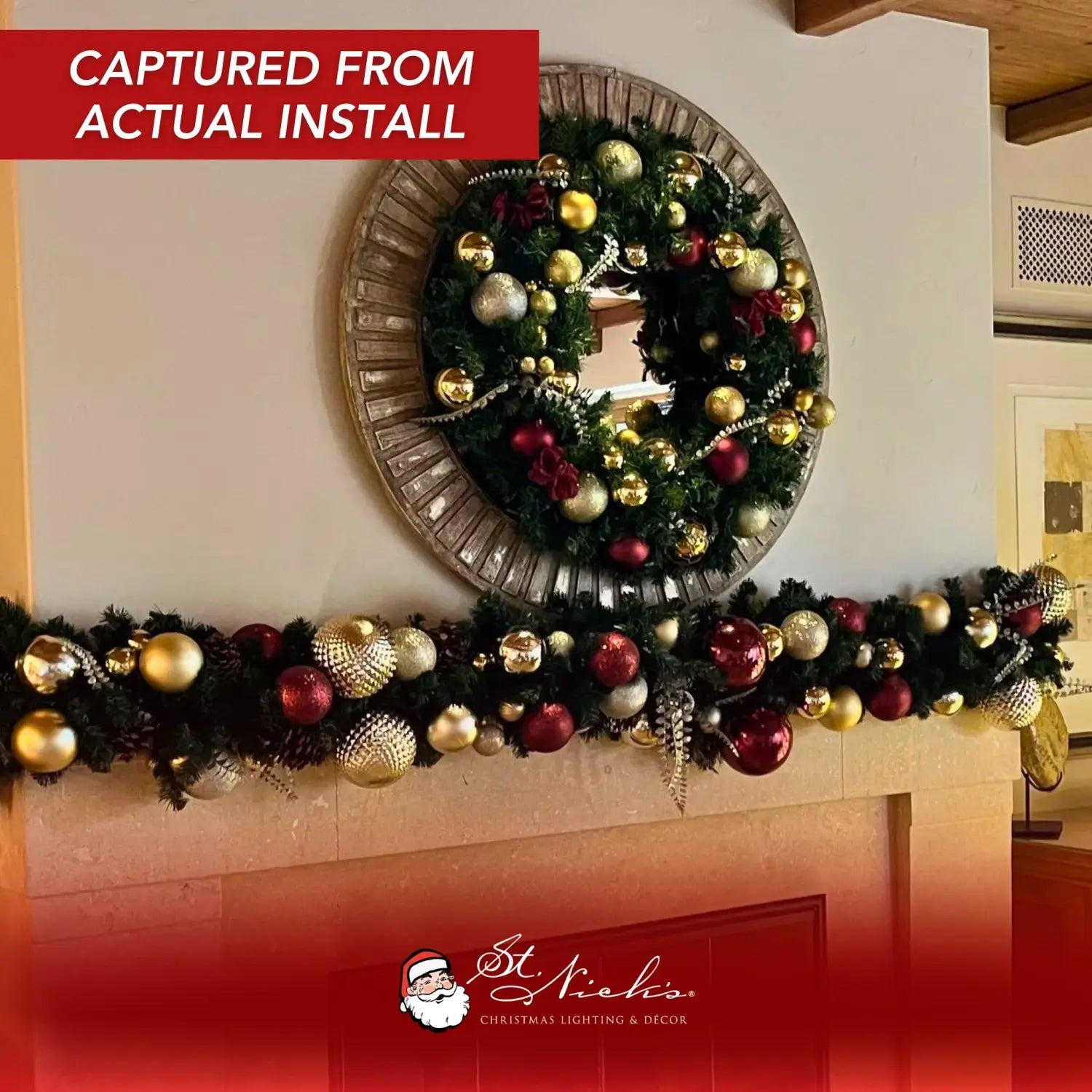
Modular Accent Systems for Multi-Season Deployment.
3. Storage Protocol Determines Lifespan
Improper storage is the primary cause of commercial wreath failure. Professional storage protocol includes:
- Climate-controlled storage where feasible
- Vertical racking systems to prevent compression
- Individual protective wrapping
- Hardware separation and labeling
- Inventory tagging for district-scale deployments
For municipalities managing 50–300+ units, inventory discipline directly impacts capital replacement cycles.
How should commercial wreaths be stored to extend their lifespan?
Store wreaths vertically on rack systems to prevent compression, wrap each unit individually, and separate mounting hardware with clear labeling. Climate-controlled storage further reduces material fatigue and deformation.
Commercial Seasonal Storage Infrastructure Planning Guide
Municipal Infrastructure Planning
4. Refurbishment & Mid-Cycle Maintenance
A structured refurbishment plan extends lifecycle performance and stabilizes replacement budgets.
Annual Evaluation Checklist
- Frame weld integrity
- UV color degradation
- Fastener stress points
- Ribbon system wear
- Mount bracket condition
Typical Refurbishment Components
- Ribbon replacement
- Accent refresh
- Hardware replacement
- Minor foliage repair
Full structural replacement is rarely required when the original construction is commercial grade.
When should a municipality replace wreaths rather than refurbish them?
Replace wreaths only when structural integrity is compromised. If the steel frame remains intact, refurbishment of the ribbon, hardware, and accents is typically sufficient for continued multi-year deployment.
5. Procurement Planning & Budget Strategy
Commercial buyers should align wreath programs with fiscal-year planning and production scheduling.
Recommended Timeline
- Q1: Planning, specification, and budget alignment
- Q2: Production booking and hardware confirmation
- Q3: Logistics coordination and pre-kitting
- Q4: Installation and deployment
Waiting until late Q3 or Q4 increases:
- Production bottlenecks
- Freight surcharges
- Installation compression
- Vendor risk
What is the best time to order commercial wreath systems?
Commercial wreath systems should be specified and booked in Q1 or early Q2 to secure production capacity and avoid freight premiums or compressed installation timelines.
6. Installation Logistics & Risk Management
Large-scale wreath deployments require structured planning to reduce labor volatility and safety exposure.
Key Installation Considerations
- Lift access planning and corridor sequencing
- Mount compatibility audits
- Wind exposure assessment
- Pole diameter standardization
- Hardware pre-kitting
Professional pre-planning reduces:
- On-site labor time
- Public safety exposure
- Weather-related delays
- Overtime costs
Pole Banner Installation & Wind Safety Protocol
View Municipal Installation Proof
Frequently Asked Questions
How long do commercial outdoor wreaths last?
Commercial outdoor wreaths typically last 3–7 years, depending on climate exposure, wind conditions, UV intensity, and storage protocol.
Are commercial wreaths wind-rated?
Yes. Commercial wreath systems use wind-rated mounting brackets and reinforced steel frames designed for municipal deployment.
Can wreath systems be reused every year?
Yes. With proper storage and modular accent replacement, commercial wreath structures can be reused annually with minimal refurbishment.
What is the difference between retail and commercial wreaths?
Retail wreaths use lightweight frames and non-rated materials. Commercial wreaths use welded steel cores, UV-stabilized foliage, and engineered mounting systems.
Structure a Multi-Year Municipal Wreath Program
St Nicks engineers commercial wreath systems designed for municipalities, retail property corridors, hospitality environments, airports, and commercial campuses. If your program is not structured on a 3–7 year lifecycle model, you’re likely increasing replacement frequency and budget volatility.
- Engineering-first specifications for wind and UV exposure
- Repeat-deploy programs with modular refresh components
- Storage and refurbishment planning to extend asset lifespan
Next step: Request a commercial review to align your wreath program with budget cycles, installation logistics, and lifecycle ROI.
Recommended for municipalities, downtown districts, retail property groups, campuses, and hospitality environments managing repeat seasonal deployments.


