
Commercial Planning Framework
A multi-year capital strategy for municipalities, airports, shopping centers, and religious institutions managing repeat seasonal deployment.
Overview
Seasonal banners, lighting systems, wreaths, and anchor displays are not decorative purchases. They are repeat-deployment infrastructure assets. Municipalities, airports, shopping malls, and religious campuses must manage these systems using engineering standards, wind planning, electrical safety, storage discipline, and multi-year budget forecasting. Treating seasonal programs as infrastructure, not décor, extends asset lifespan, reduces replacement costs, improves public safety, and stabilizes capital planning.
Municipal seasonal infrastructure planning is a multi-year system that manages banners, lighting, wreaths, and large-scale displays as capital assets. It includes hardware standardization, wind-rated engineering, electrical load planning, structured storage, refurbishment cycles, and budget forecasting to reduce replacement costs and improve safety across cities, airports, retail centers, and religious campuses.
Key Takeaways
- Seasonal systems should be managed as capital infrastructure, not décor.
- Structural cores often last 5–10 years when engineered and stored correctly.
- Wind rating and torque-tested hardware prevent most field failures.
- Electrical backbone planning reduces risk and downtime.
- Proper storage can extend asset life by multiple seasons.
- A 3-year planning model stabilizes budgets and reduces emergency replacement.
- Airports, malls, and religious campuses require tailored deployment protocols.
- Refurbishment often removes the need for full replacement.
Turn Seasonal Storage Into a Lifecycle System
Built for municipalities, airports, shopping centers, and religious campuses, managing repeat deployment. Download the planning guide that supports longer asset life and more predictable budgets.
Commercial-only. Residential requests are not supported.
1) What Is Seasonal Infrastructure?


Seasonal infrastructure includes repeat-deployment systems such as pole banners, structural wreath frames, large-scale trees, roofline lighting, mounting brackets, anchors, and electrical distribution components.
- Pole banner systems (hardware + panels)
- Wreath frames + wind-rated mounting
- Large-scale commercial trees (structural + modular overlays)
- Exterior lighting networks (power distribution + connectors)
- Mounting brackets, anchors, fasteners
These systems operate in wind, rain, UV exposure, and public corridors. They must be planned like infrastructure to remain reliable over multiple seasons.
2) Why Infrastructure Planning Matters

Without a structured planning model, programs drift into reactive replacement cycles—hardware fails in wind, electrical connectors degrade, storage causes compression damage, and installation becomes rushed.
With infrastructure planning, organizations gain predictable deployment, longer asset lifespan, safer installs, and stable budget forecasting.
3) Application by Institution Type
Municipalities & Downtown Districts
Cities manage streetscapes, civic plazas, corridor lighting, and pole-mounted systems. Priority requirements include wind-rated hardware, standardized brackets, and public safety risk control.
Airports
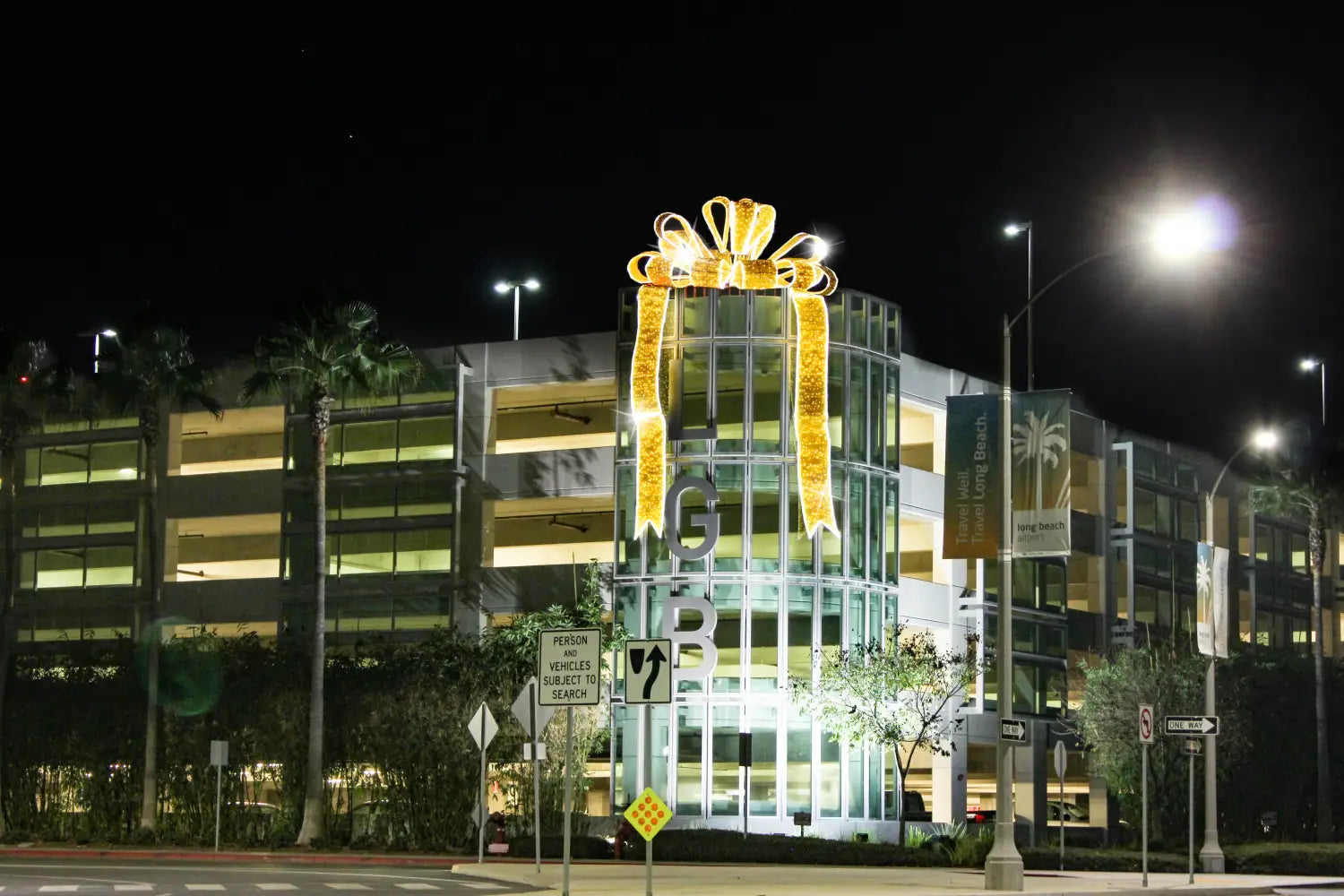
Airports operate in high-wind, high-security environments with heightened compliance expectations. Seasonal systems must be engineered for structural load, electrical redundancy, corrosion resistance, and controlled installation windows.
Shopping Malls & Retail Centers
Retail properties must align deployment with tenant marketing cycles and foot-traffic safety. Most cost control comes from preserving structural cores and refreshing modular overlays rather than replacing full systems annually.
Religious Institutions
Religious campuses often operate on fixed annual calendars and reuse assets long-term. Storage discipline, inspection cycles, and electrical safety checks determine whether assets last for years or fail early.
4) Separate the System Into Components
To prevent full-system replacement, separate your program into three parts:
| Component | Typical Lifecycle | What it includes |
|---|---|---|
| Structural Core | 5–10 years | Steel frames, anchor systems, brackets, primary mounts |
| Visual Overlay | 1–3 years | Banners, graphic panels, ribbon systems, and modular accents |
| Electrical Backbone | 5–8 years | Wiring harnesses, controllers, connectors, and distribution planning |
This model protects capital by reusing structural investments while updating overlays on planned cycles.
5) Hardware Standardization

Mixed hardware across corridors creates long-term cost and safety problems. Standardization requires a single bracket system, documented torque ranges, verified anchor integrity, and consistent use of corrosion-resistant materials.
- Uniform bracket type and mounting geometry
- Torque standards and inspection schedule
- Corrosion monitoring and replacement thresholds
- Compatibility audits (pole diameters, anchors, mount points)
Related planning resources:
6) Wind Planning & Engineering

Wind failure is rarely a graphic issue. It is almost always a hardware and load planning issue. Wind planning should include local exposure classification, load-tolerance checks, arm-deflection limits, annual torque inspections, and corrosion monitoring.
- Wind zone classification and exposure mapping
- Load tolerance checks (surface area and attachment weight)
- Arm deflection and bracket fatigue monitoring
- Torque-tested hardware before redeployment
7) Electrical Infrastructure Planning
Lighting systems require electrical discipline: circuit load balancing, weatherproof connectors, ground fault protection, voltage drop modeling, and pre/post storage testing. Airports and malls should maintain compliance documentation.
- Load distribution planning (avoid overload and voltage drop)
- Weatherproof connector standards and inspection schedule
- Electrical continuity testing before storage and before installation
Request a Seasonal Infrastructure Review
Get an engineering-first assessment of your hardware standardization, wind exposure, electrical readiness, storage protocol, and 3-year budget plan.
- Hardware continuity (brackets, anchors, torque standards)
- Wind-rated readiness for open corridors and public right-of-way
- Electrical planning and weatherproofing standards
- Storage + refurbishment cycle to extend asset lifespan
Recommended for programs managing 25–300+ assets across multiple corridors or facilities.
8) Annual Planning Cycle (Q1–Q4)
A structured annual cycle prevents reactive overtime and emergency replacement. Use this approach across cities, airports, malls, and campuses.
Q4 — Removal & Intake
- Controlled removal protocol (protect reusable components)
- Immediate hardware inspection and torque review
- Electrical continuity testing
- Asset tagging and corridor-based labeling
Q1 — Refurbishment & Production Booking
- Overlay refresh (panels, ribbons, modular accents)
- Hardware repair or replacement (where needed)
- Secure production windows early
Q2 — Preparation
- Lift routing and corridor sequencing
- Pre-kitting hardware sets
- Wind exposure review for spring storms
Q3 — Pre-Deployment
- Final inspections and electrical retesting
- Staging plan confirmation
- Crew scheduling and contingency planning
9) Storage Infrastructure Strategy
Most lifecycle damage happens in storage. Proper storage extends lifespan, reduces missing components, and stabilizes budgets.
- Vertical racks (avoid compression and distortion)
- Labeled hardware bins by corridor/asset group
- Climate control, where feasible (reduce corrosion and mold risk)
- Electrical separation and connector protection
- Intake inspection documentation (pass/fail readiness)
Download: Commercial seasonal storage infrastructure planning guide
10) Refurbish vs Replace
Replace only when a structural or electrical safety risk exists. Otherwise, refurbish to extend the lifecycle and protect capital planning.
Replace when
- Structural welds fail, or frames deform beyond tolerance
- Wind fatigue exceeds hardware load thresholds
- Electrical backbone fails safety testing
Refurbish when
- Visual fading or overlay wear is the primary issue
- Minor corrosion is present, but not structural
- Hardware needs controlled replacement, not system reset
11) Multi-Year Budget Model (3-Year Cycle)
A 3-year rolling model reduces capital spikes and aligns with procurement timelines for municipalities, airports, and commercial properties.
- Year 1: audit + standardize hardware and storage
- Year 2: modular overlay refresh + targeted lighting upgrades
- Year 3: structural inspection + controlled refurbishment
12) Installation Risk & Public Safety

Installations occur in live public environments. Risk mitigation requires routing, scheduling, and pre-kitted systems to reduce on-site exposure.
- Lift access and traffic/pedestrian control planning
- Weather contingency scheduling and wind verification
- Hardware pre-kitting to reduce on-site time
- Electrical safety checks and documented sign-off
Move From Seasonal Purchasing to Multi-Year Infrastructure
Explore engineered systems designed for repeat deployment, asset protection, and predictable budgeting.
Prefer an engineered recommendation? Use the consultation form to qualify the scope, exposure, and installation constraints.
FAQ
What is municipal seasonal infrastructure planning?
It is a multi-year strategy for managing seasonal banners, lighting, wreaths, and displays as capital assets using engineering standards, storage discipline, and budget forecasting.
How long should commercial seasonal systems last?
With proper engineering and storage, structural components often last 5–10 years. Visual overlays typically refresh every 1–3 years based on exposure and branding needs.
What wind rating is required for pole banner systems?
Wind rating depends on local code and exposure zone. Commercial systems should include documented load classification, torque-tested brackets, and corrosion-resistant hardware matched to site conditions.
How do airports manage seasonal installations safely?
Airports use engineered anchoring, structural load verification, electrical redundancy, corrosion-resistant components, and controlled installation scheduling with compliance documentation.
How can shopping malls reduce seasonal replacement costs?
By maintaining structural cores (frames, anchors, electrical backbone) while refreshing modular overlays like graphic panels and accent lighting, instead of replacing full systems annually.
How should religious institutions store seasonal assets?
Store assets vertically when possible, label hardware by zone, keep components dry, protect electrical connectors, and document intake inspections before storage and before redeployment.
When should seasonal infrastructure be replaced?
Replace only when a structural or electrical safety risk exists. Otherwise, refurbishment and modular refresh typically extend the lifecycle at a lower cost.
Conclusion
Cities, airports, shopping malls, and religious campuses operate in public-facing environments where safety, durability, logistics, and budget control matter. Seasonal infrastructure must be engineered, stored, deployed, and forecasted with long-term discipline.
The right question is not: “How will this look this year?”
It is: “How will this perform over the next five?”


