
Most cities decorate for Mardi Gras the same way every year.
That is why their displays blend into the background.
If you want people to stop, take photos, and share your space, your lighting needs a plan. This guide shows how cities, malls, and outdoor venues use professional lighting systems to build Mardi Gras displays that install fast, scale cleanly, and stay reusable year after year.
Why Mardi Gras lighting works for commercial and public spaces
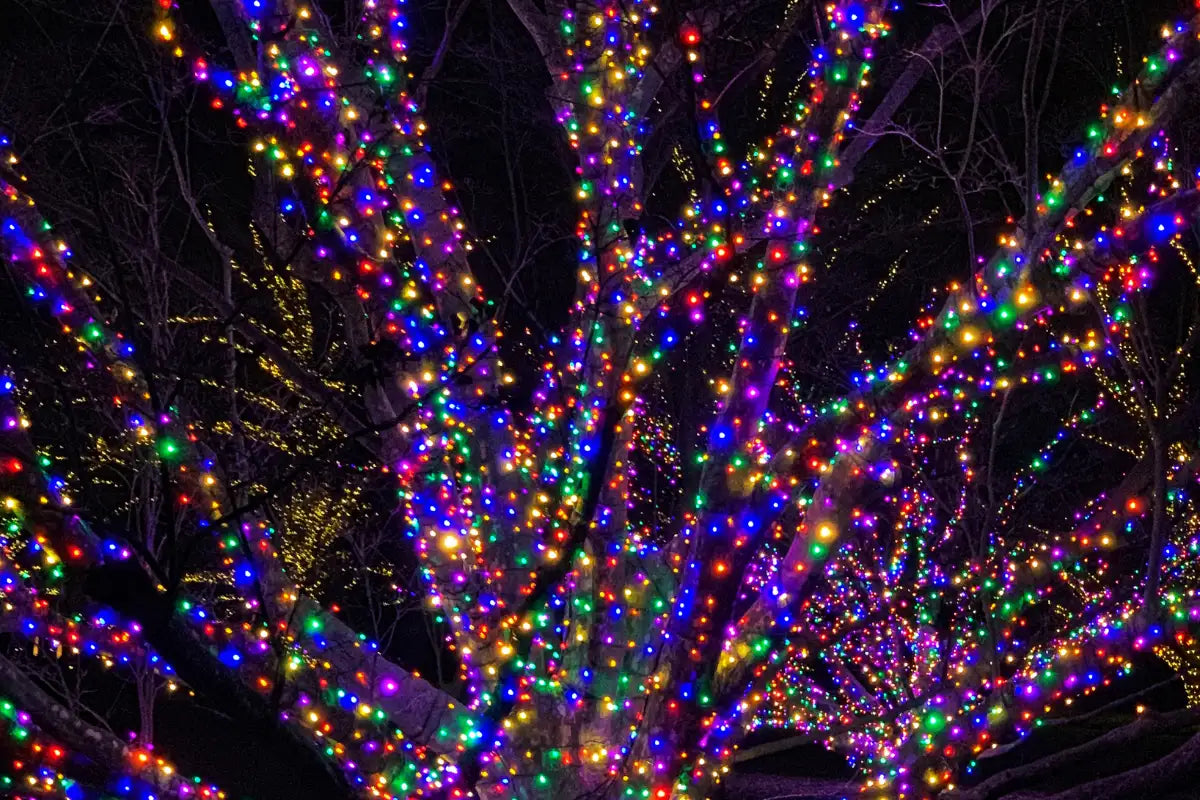
Mardi Gras is one of the few seasonal windows where bold color is expected in public environments. That expectation gives cities and venues permission to do more visually without overwhelming the space.
Well-planned Mardi Gras lighting does three jobs:
- Pulls people in: bold zones draw attention to entrances, plazas, and corridors.
- Guides movement: repeated patterns help visitors understand where to walk and gather.
- Creates shareable moments: photo zones earn organic exposure without extra marketing spend.
For municipalities and property teams, lighting is also a practical upgrade. It delivers high impact without permanent construction.
The Mardi Gras color strategy (purple, green, and gold) looks professional
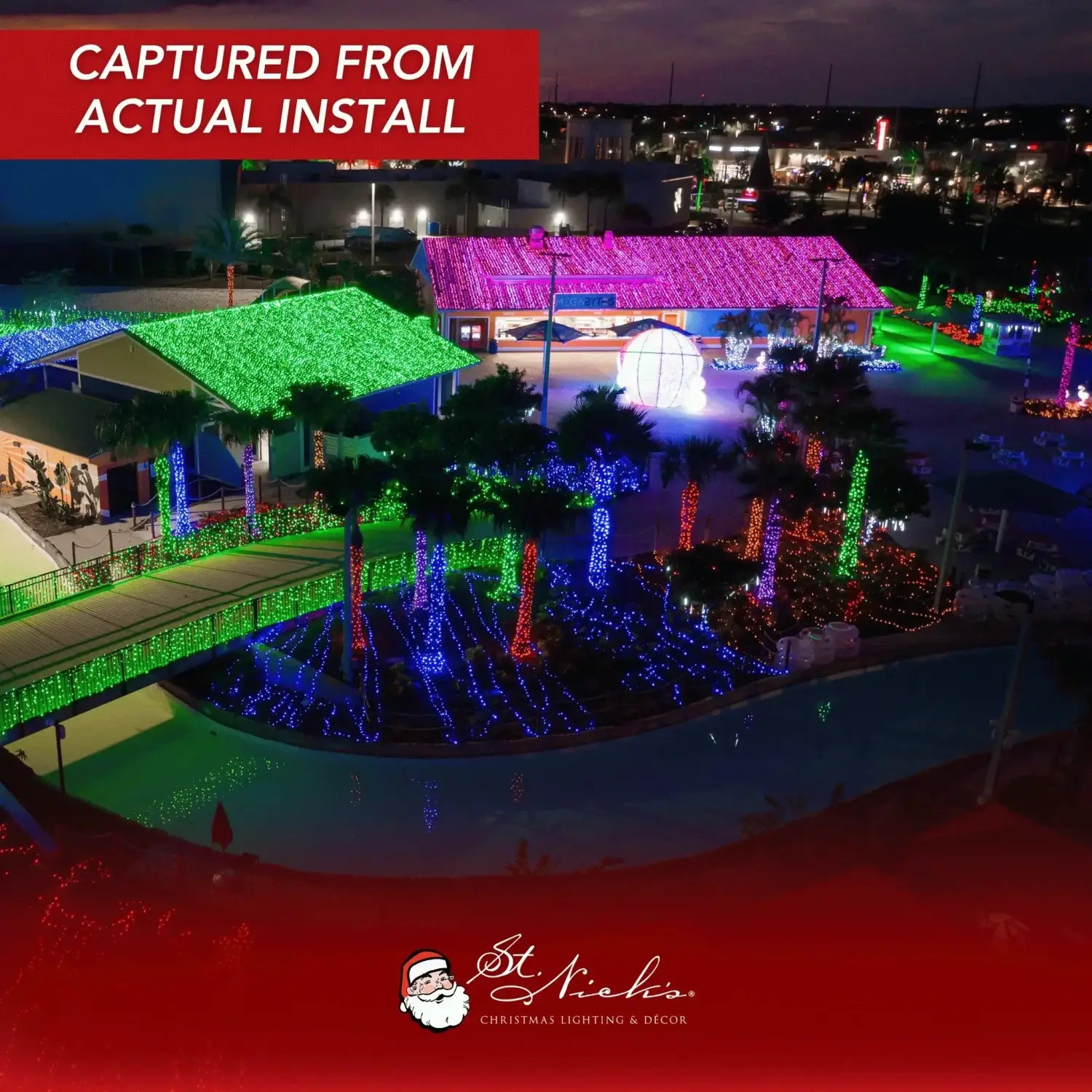
The most common mistake is using all three colors everywhere. That creates visual noise.
Commercial installs assign roles to each color:
- Purple: headline moments (main entrances, hero trees, primary facade).
- Green: depth and balance (wraps, railings, secondary zones).
- Gold: warmth and visibility (path outlines, accents, edges).
Start with a simple repeatable pattern. Then repeat it down the corridor so the space feels intentional. Consistency will look more premium than adding more product.
Best lighting types for large outdoor installations
For commercial installs, durability and speed matter more than novelty. These are the most reliable workhorses:
- LED mini lights for wraps, facades, railings, and trees.
- Outdoor string lights for courtyards, walkways, and gathering zones.
- Commercial LED rope light for clean outlines on stairs, planters, and edges.
Shop the core lighting categories:
- Multi Color Mini Lights
- Outdoor String Lights
- Commercial LED Rope Light
Designing lighting for streets, malls, and plazas
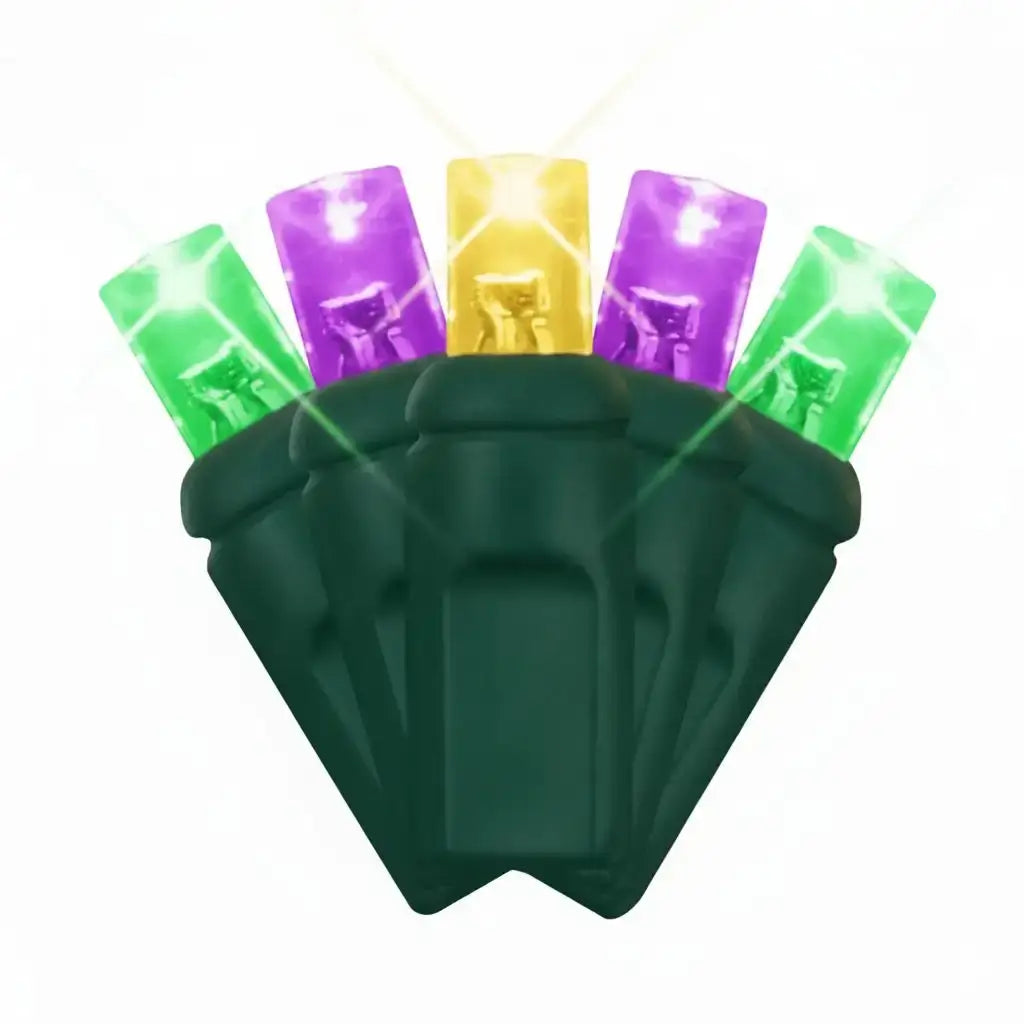
Layout matters more than product volume.
Strong designs use:
- Entry points: make the first 20 seconds visually obvious so people know where to start.
- Repeats: repeat the same unit every pole, every other pole, or every bay. The spacing matters less than the consistency.
- Hero zones: build one or two photo moments per area so the display has a clear purpose.
A simple rule: build the route first, then add the highlights. If you build highlights first, everything else becomes random.
Reuse Christmas lighting infrastructure (the highest ROI move)
Most municipalities and commercial properties already own usable lighting systems from prior installs. Instead of starting over, reuse what already works:
- mounting hardware
- power runs
- structural layouts
The refresh comes from color swaps, repositioning, and adding one or two focal zones.
For a step-by-step reuse plan, use this supporting guide:
How to Reuse Christmas Lights for Mardi Gras Events
Install timelines that are realistic for cities and venues
Typical ranges:
- 1–2 days: small plaza or single entrance zone.
- 2–4 days: mall exterior, courtyard, or multi-entry property.
- 3–7 days: downtown corridor or multi-zone venue.
The biggest delay is usually inventory gaps, not labor. Plan early so crews can install rather than wait.
How to order in systems (bundles) so deployment stays fast
Order by footprint, not by impulse. Start with:
- number of poles
- number of focal points (trees, entrance statements)
- linear feet of edges (railings, planters, stairs)
If you are building a street corridor, use banners and trees to create structure. This supporting guide shows the layout logic:
Turn Any Space into a Mardi Gras Parade Route with LED Trees & Pole Banners
Fast-deploy option when timelines are tight
If you are inside a short planning window, use a ready-to-ship approach that repeats the same units across zones.
Use this guide to plan fast installs for municipalities and event planners:
Ready-to-Ship Mardi Gras Décor Bundles for Municipalities & Event Planners
Build a Mardi Gras system that installs cleanly
If you want a Mardi Gras display that installs fast and looks professional, start with pro-grade lighting and a repeatable layout.
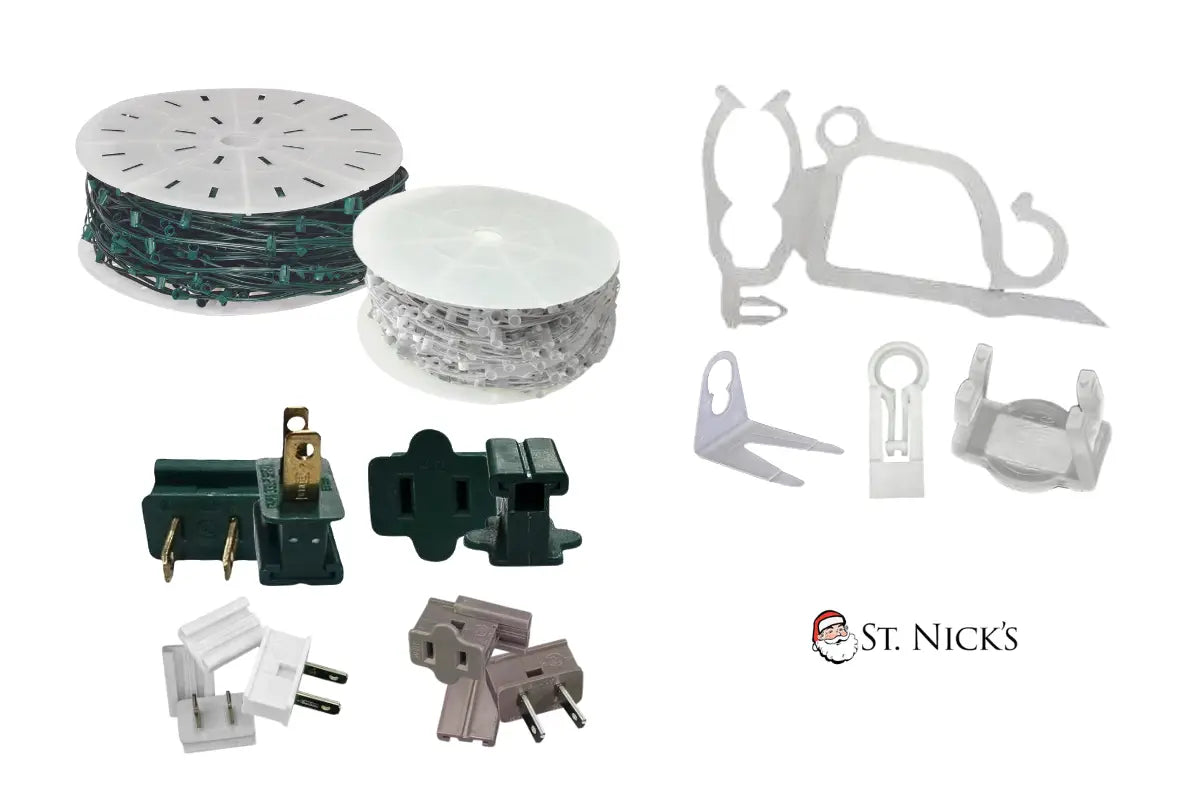
Use Installation Essentials for commercial planning
FAQ: Mardi Gras lighting for cities, malls, and outdoor venues
What colors should commercial Mardi Gras lighting use?
Most commercial displays use purple, green, and gold. Purple works best for entrances and focal points, green adds depth in secondary zones, and gold improves warmth and nighttime visibility for outlines and accents. If you need color-ready product options, start with multi-color mini lights.
What lighting types work best for city streets and outdoor venues?
For large outdoor installs, LED mini lights work well for wraps and facades, outdoor string lights work well for walkways and gathering areas, and commercial LED rope lights work well for clean outlines along edges, stairs, and railings.
Can cities reuse Christmas lights for Mardi Gras displays?
Yes. Many municipalities reuse mounting hardware, power runs, and structural layouts from Christmas installs. A Mardi Gras refresh typically comes from changing color placement and adding focal zones or banners. For the step-by-step approach, see how to reuse Christmas lights for Mardi Gras.
How early should commercial Mardi Gras lighting be planned?
Planning early helps secure inventory and installation windows. Commercial buyers typically benefit from planning several weeks so orders can be sized by footprint and crews can install without waiting on product availability. If you are coordinating an install team, use Installation Essentials as your planning baseline.
How do you estimate quantities for a commercial Mardi Gras install?
Estimate by footprint: count poles, select focal points, and measure linear feet for edges, railings, and pathways. Ordering in repeatable systems reduces errors and keeps multi-zone deployments consistent. For fast corridors and gathering zones, plan around outdoor string lights and repeat patterns.
What is the fastest way to make a Mardi Gras display look professional?
Use a repeatable layout. Build one hero zone, repeat a consistent pattern down the corridor, and keep colors assigned to specific roles. Consistency usually looks more professional than adding more product. If you need the quick layout method, use the parade route guide.


