
What This Article Covers
Commercial LED rope lights are secondary lighting systems used in public and commercial environments to support wayfinding, perimeter lighting, and architectural outlining. They supplement but do not replace primary or life-safety lighting systems.
When specified and installed correctly, commercial LED rope light systems can be integrated into existing electrical infrastructure and maintained reliably over long operating cycles. Their value extends beyond energy savings to include reduced system complexity, improved maintenance planning, and consistent performance in municipal and institutional settings.
Key Takeaways: Commercial LED Rope Lights
- Commercial LED rope lights are secondary lighting infrastructure, not decorative lighting.
- They are commonly used for wayfinding, perimeter lighting, and edge definition in public and commercial spaces.
- They supplement but do not replace primary or life-safety lighting.
- System standardization, predictable maintenance, and reduced complexity drive long-term value, not energy savings alone.
- Energy savings must be calculated using verified wattage and real operating hours, not nameplate assumptions.
- Successful deployments balance efficiency, compliance, maintainability, and human experience.
What Are Commercial LED Rope Lights Used For in Secondary Lighting Systems?
Public and commercial lighting systems are typically organized into functional layers.
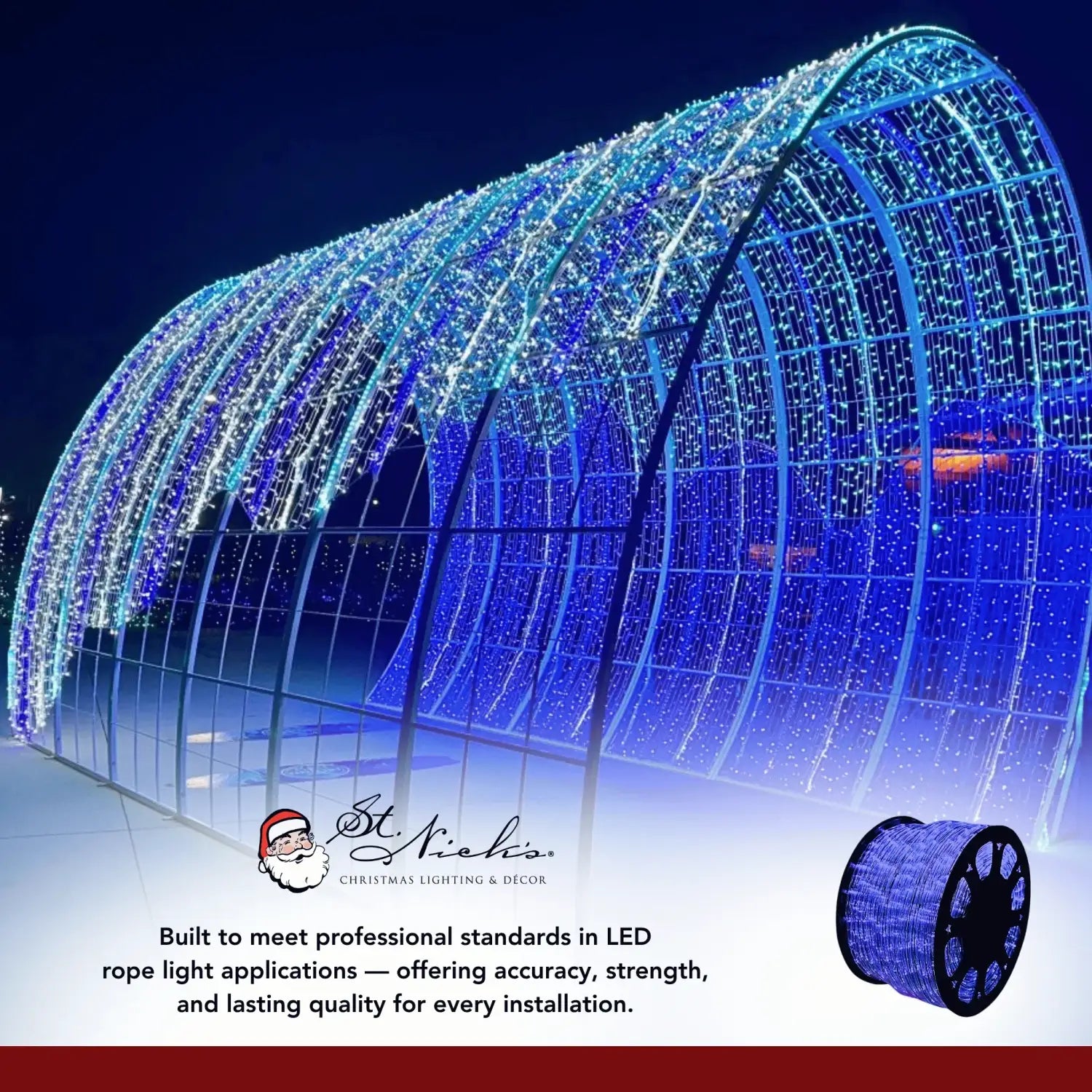
Primary Lighting
- Area lighting
- Roadway and vehicular luminaires
- High-lumen architectural fixtures
Secondary Lighting
- Perimeter lighting
- Walkway and pathway definition
- Wayfinding and circulation guidance
- Edge and transition definition
Accent and Seasonal Lighting
- Cultural and civic programs
- Temporary or event-based overlays
Commercial LED rope lights perform best in the secondary lighting layer, where continuous illumination and visual clarity are required without the cost, weight, or power demand of architectural fixtures.
Unlike consumer decorative lighting, commercial-grade LED rope lights can be standardized across multiple sites, simplifying procurement, installer training, and long-term maintenance.
How Are Commercial LED Rope Lights Specified as Lighting Infrastructure?
Institutional and municipal buyers should choose LED rope lighting as a full lighting system, not just a single product.
A typical commercial LED rope lighting system includes:
- LED rope light (output, voltage, CCT, jacket material)
- Power supplies specified with engineering headroom (commonly ~20%)
- Manufacturer-rated connectors and terminations
- Mounting systems appropriate to the substrate and environmental exposure
- Controls (photocells, timers, dimming, zoning), where applicable
- Surge protection when required by site conditions
- Documentation supporting listing, installation, and maintenance
System performance depends on the interaction of all components and compliance with the manufacturer's installation instructions. Rope lights used in public and commercial places should follow safety standards. This includes EN 60598-2-21, which has specific rules for rope lights.
What Are the Operational Benefits of Commercial LED Rope Lights?
Energy Efficiency and Lifecycle Cost Control
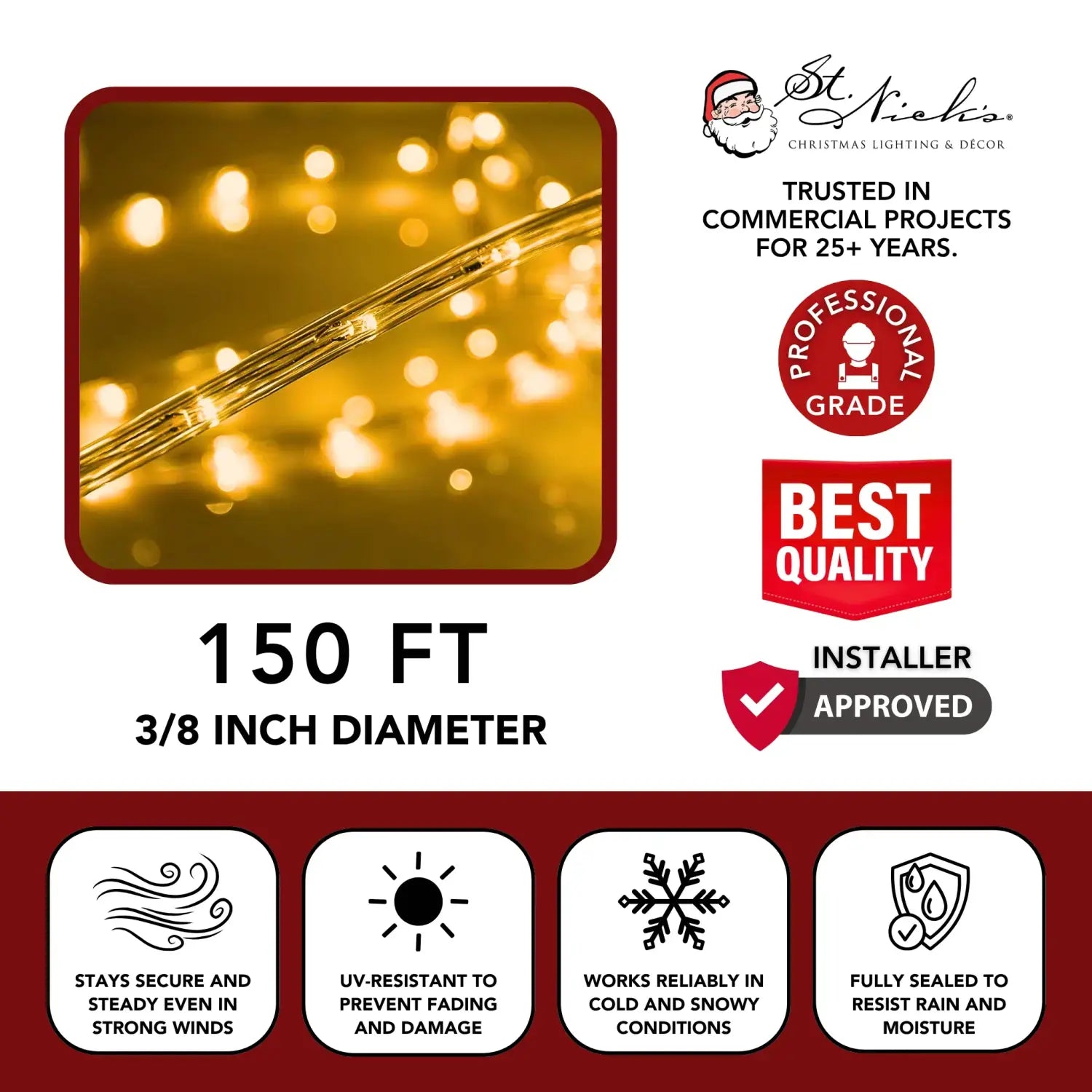
Commercial LED rope lights typically operate at lower input power than legacy neon or incandescent outlining systems, depending on product selection and brightness targets. Because published watt-per-foot values vary widely, verification against manufacturer specifications is essential.
For large footprints such as campuses, retail portfolios, streetscapes, and mixed-use developments, lower wattage simplifies energy forecasting and supports predictable operating budgets.
From a lifecycle perspective:
- Lower energy draw reduces annual operating costs
- Reduced heat output lowers component stress
- Many commercial linear LED systems can last for tens of thousands of hours. This may change replacement cycles beyond the usual five-year planning period
These characteristics align with standard capital-planning and energy-savings models used by facilities and municipal finance teams.
How Are Commercial LED Rope Lights Used for Seasonal and Cultural Lighting Programs?
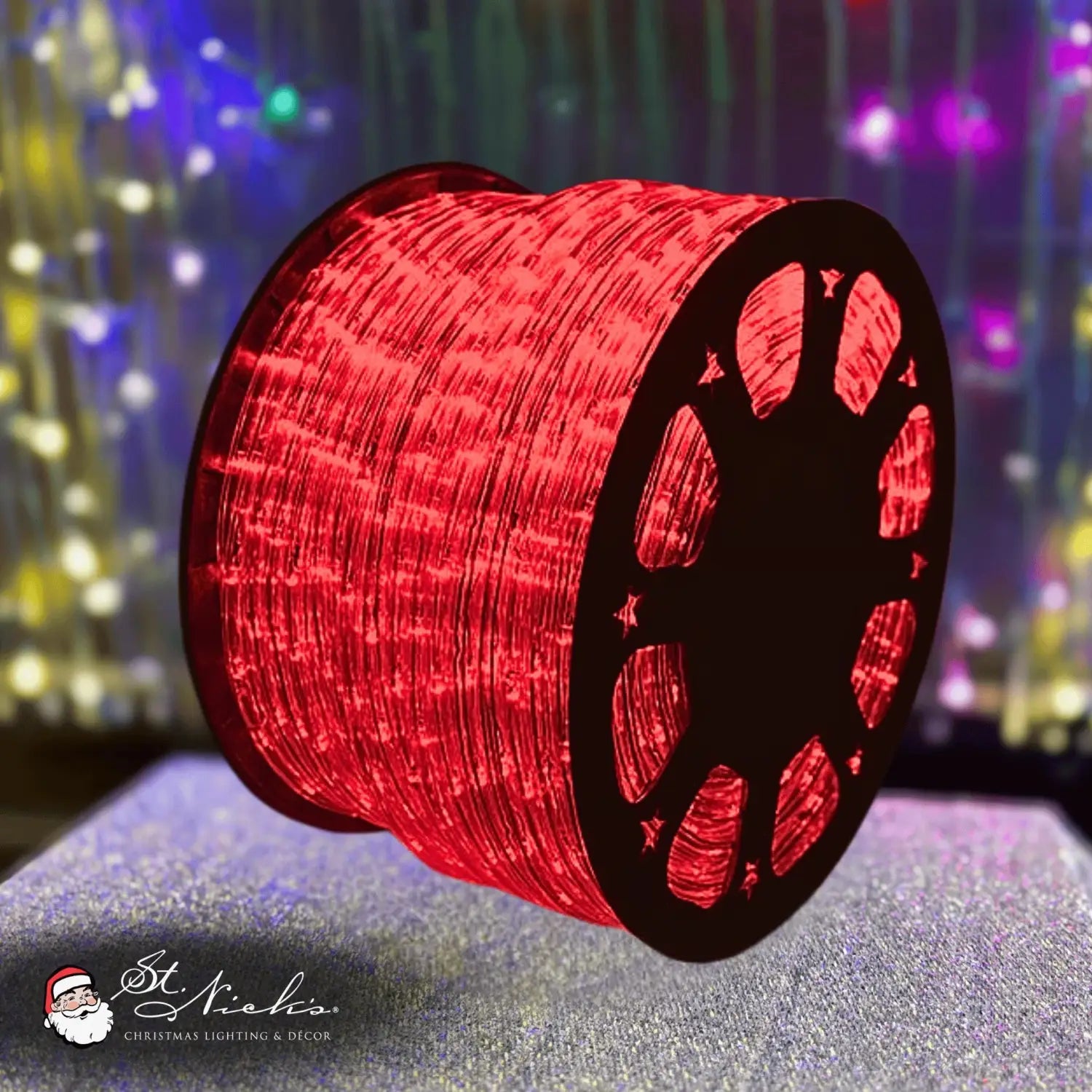
Commercial LED rope lights are frequently used as the foundation layer for seasonal and cultural lighting strategies. Their flexibility allows operators to maintain consistent base lighting year-round while layering color changes aligned with cultural observances, civic programs, or branding initiatives.
Common applications include:
- Red and gold for Lunar New Year
- Warm white or cool white for winter programs and year-round architectural definition
- Orange or purple for autumn and Halloween programs
- Brand-aligned colors for promotional or civic events
This modular approach reduces inventory complexity while enabling fast, low-disruption changeovers.
How Do Commercial LED Rope Lights Compare in Energy Savings and Cost?
Comparison A: LED Rope Light vs Neon/Flex Outlining (Illustrative Example)
Example inputs (for calculation only):
- Existing neon/flex input power: 4.4 W per linear foot
- Proposed LED rope input power: 0.76 W per linear foot
- Installed length: 1,000 linear feet
- Operating hours: 4,000 hours per year
- Electricity rate: $0.15 per kWh
Calculation:
- Power difference: 3.64 W/ft
- Annual energy savings:
3.64 × 1,000 × 4,000 ÷ 1,000 = 14,560 kWh/year - Annual energy cost savings:
14,560 × $0.15 = $2,184/year
Actual results depend on verified wattage, operating schedules, controls, and local utility rates.
Comparison B: LED Rope Light vs Linear Architectural Fixtures
(When rope light is a viable secondary-lighting substitute)
| Category | LED Rope Light | Linear Architectural Fixtures |
|---|---|---|
| Intended role | Secondary lighting, wayfinding | Primary architectural lighting |
| Fixture count (600 ft outline) | Continuous run | ~150 fixtures |
| Installation complexity | Lower | Higher |
| Driver count | Fewer centralized | Many distributed |
| Maintenance access events | Infrequent | More frequent |
| Seasonal adaptability | High | Limited |
Key insight:
Commercial LED rope lights do not replace architectural luminaires. They replace system complexity where continuous secondary illumination is sufficient.
Ready to Specify a Commercial Project?
Use this guide to standardize selection criteria, reduce maintenance risk, and simplify procurement for long-run installations.
How Should Buyers Calculate Energy Savings for Commercial LED Rope Lights?
- Establish the baseline system using verified wattage and operating hours
- Define the replacement system using the manufacturer's specifications
- Calculate annual energy consumption
- Convert energy savings to cost using blended electricity rates
- Add non-energy savings, such as reduced maintenance and access costs
How Should Buyers Select Commercial LED Rope Lights for Public Projects?
Brightness and Output Planning
Evaluate brightness based on viewing distance, ambient light conditions, and functional purpose (accent versus safety).
Color Consistency and Options
Commercial installations prioritize uniform color output, limited SKUs, and consistency across locations.
Which Installation Risks Should Be Avoided with Commercial LED Rope Lights?
- Exceeding maximum run lengths
- Improper connector use
- Sharp bends or compression damage
- Mismatched mounting systems
- Improper outdoor terminations
- Excessive brightness is causing glare
What Procurement and Warranty Considerations Apply to Commercial LED Rope Lights?
Procurement documents should require verified product listings, clearly defined system components, documented substitution rules, and clearly stated warranty terms.
What Codes and Compliance Requirements Apply to Commercial LED Rope Lights?
Municipal and institutional installations must address applicable electrical codes, product listings, ingress-protection ratings, glare control requirements, and accessibility standards.
Wholesale Supply and Commercial Support
For large-scale installations, sourcing from a wholesale supplier ensures product consistency, bulk pricing, and logistical support. St Nicks Christmas Lighting & Decor offers high-quality LED rope lights. These lights come in many colors and styles. They are perfect for professional installers, decorators, and businesses.
Complementary products like star displays, snowflake displays, and lighting systems help buyers use the same vendors. This also supports different project needs.
FAQ
What are commercial LED rope lights used for?
Commercial LED rope lights are used for extra lighting. They help with wayfinding, perimeter lighting, and defining edges in public and commercial spaces.
Are commercial LED rope lights suitable for municipal projects?
Yes. When properly rated and specified, commercial LED rope lights are commonly used in municipal, campus, and institutional environments.
Do commercial LED rope lights replace streetlights or area lights?
No. LED rope lights supplement primary lighting systems but do not replace required roadway, area, or life-safety luminaires.
How should energy savings be calculated for commercial LED rope lights?
Energy savings should be calculated using verified input wattage for both existing and proposed systems, multiplied by actual operating hours and local electricity rates.
What should procurement teams look for when specifying LED rope lights?
Procurement teams should verify product listings, environmental ratings, consistent specifications, warranty terms, and compatibility with commercial electrical systems.
Conclusion: Secondary Lighting as Infrastructure
Commercial LED rope lights function most effectively as secondary lighting infrastructure in public and commercial environments. Their value lies in supporting wayfinding, perimeter definition, and architectural outlining while enabling standardized deployment, predictable maintenance, and long-term operational consistency.
In municipal and institutional contexts, successful lighting strategies balance efficiency, compliance, maintainability, and human experience. Commercial LED rope lights help create balance when used as part of a layered lighting system, not just as decorations.
Working on a commercial or multi-site project? Request pricing from contractors or product specifications to support your installation planning.
Related Commercial Rope Lighting Guides
-
LED Rope Light Installation & Buying Guide for Commercial Projects
-
Understanding IP Ratings for Commercial LED Rope Lights


